American football
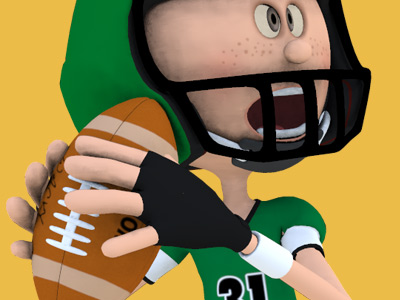
Maneuvers
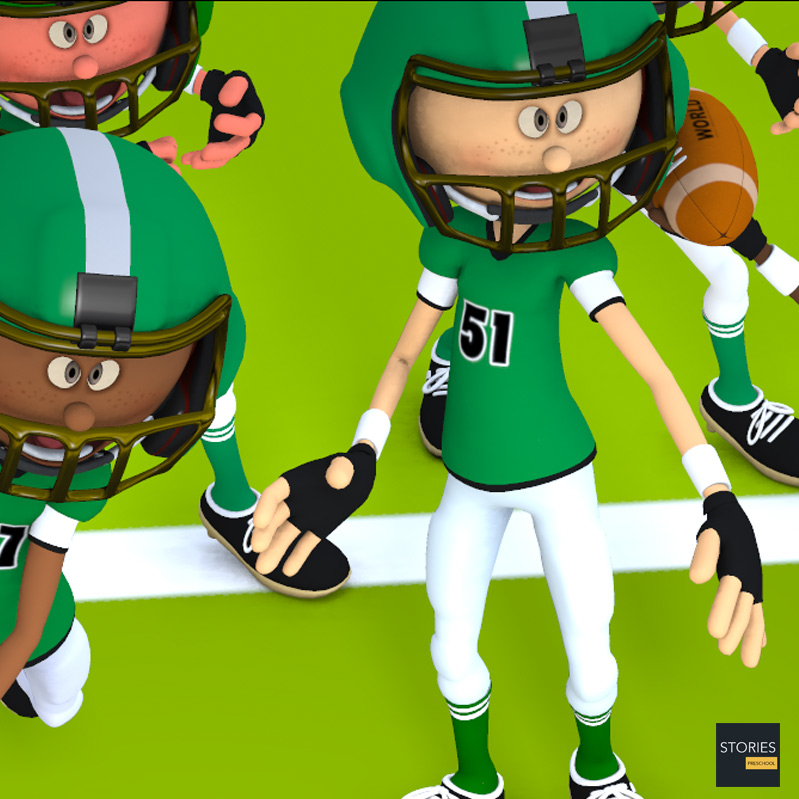
In sport, a huddle is an action of a team gathering together, usually in a tight circle, to strategize, motivate or celebrate. It is a popular strategy for keeping opponents insulated from sensitive information, and acts as a form of insulation when the level of noise in the venue is such that normal on-field communication is difficult.
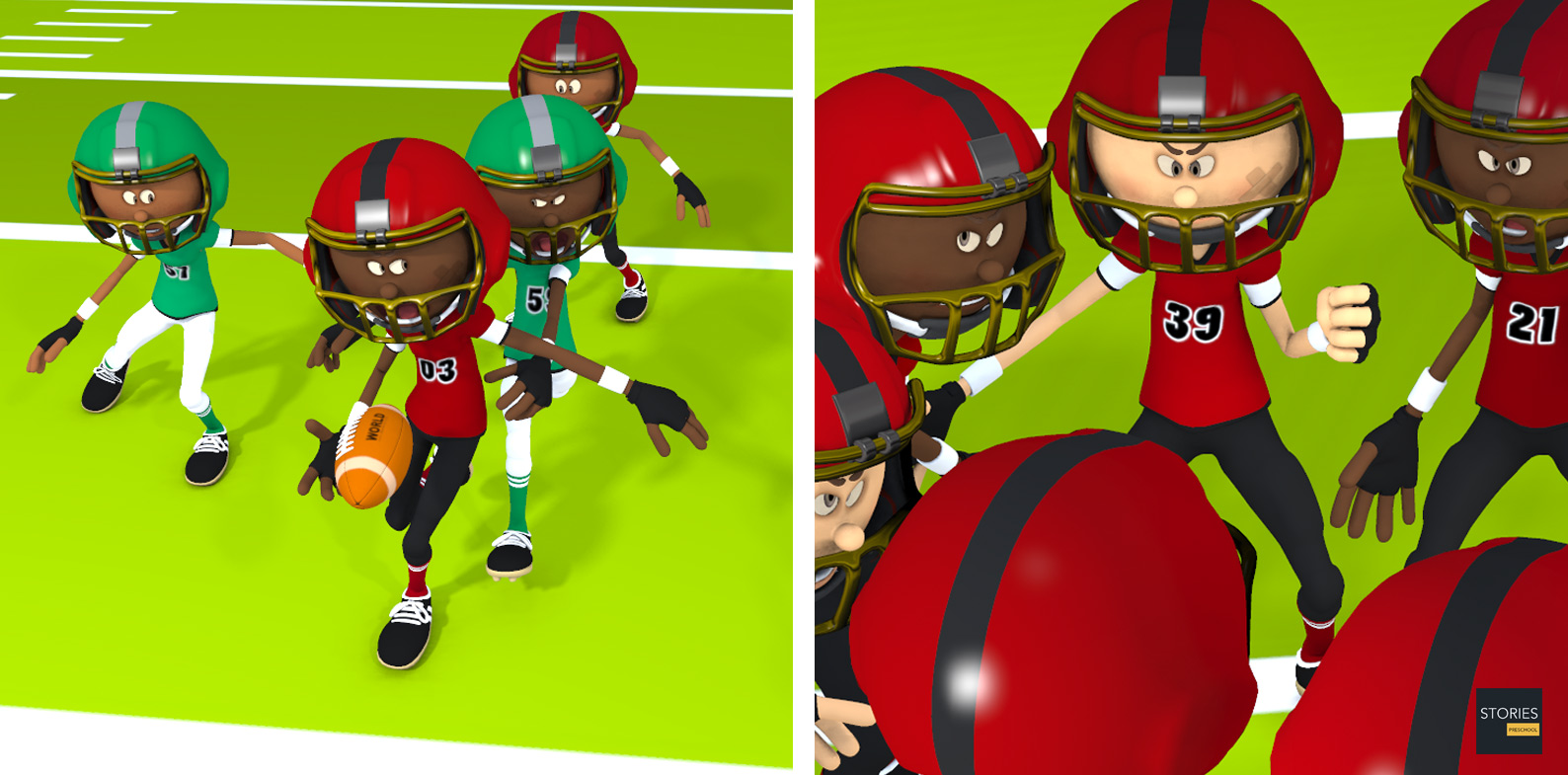
Commonly the leader of the huddle is the team captain and it is the captain who will try to inspire his fellow team members to achieve success. Similarly after an event a huddle may take place to congratulate one another for the teams success, or to commiserate a defeat. The term "huddle" can be used as a verb as in "huddling up".
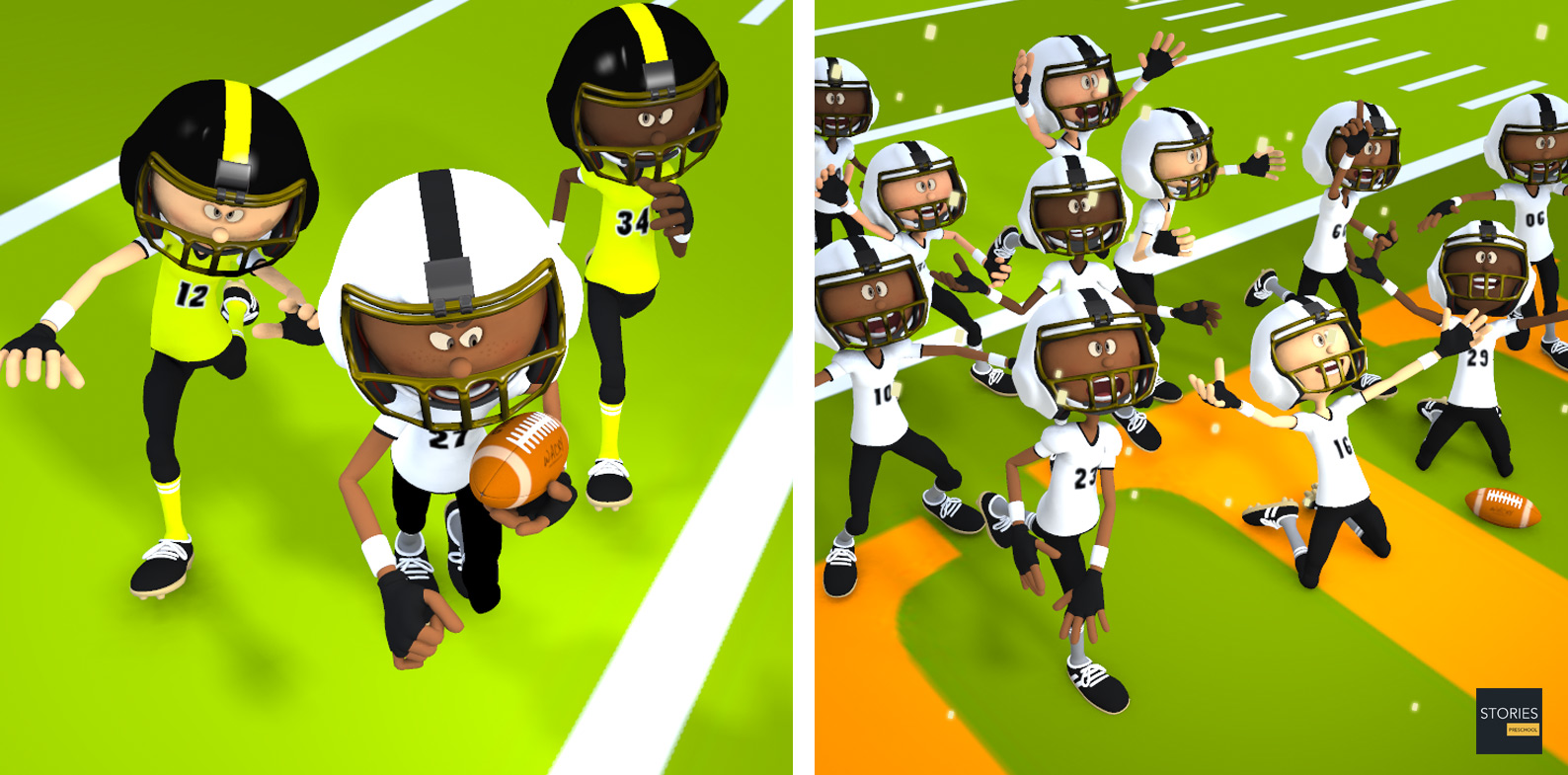
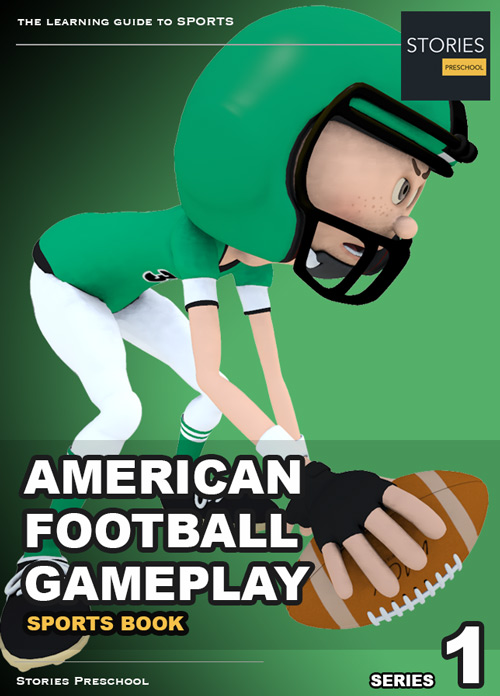
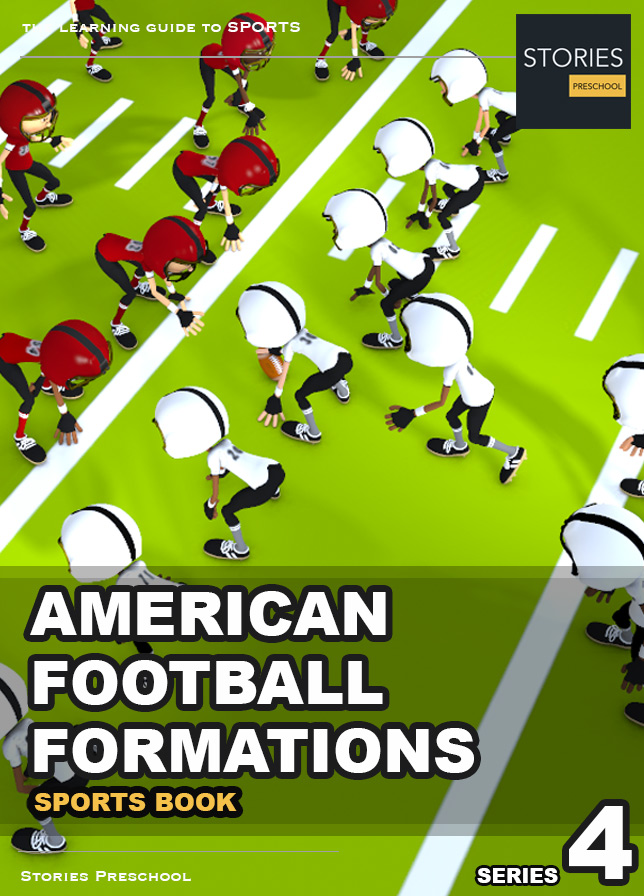
Stance is the position an American football player adopts when a play begins. There are three common stances used by linemen: two-point, three-point, and four-point. The stance names reference the number of points where a player's body is touching the ground while down in the stance.
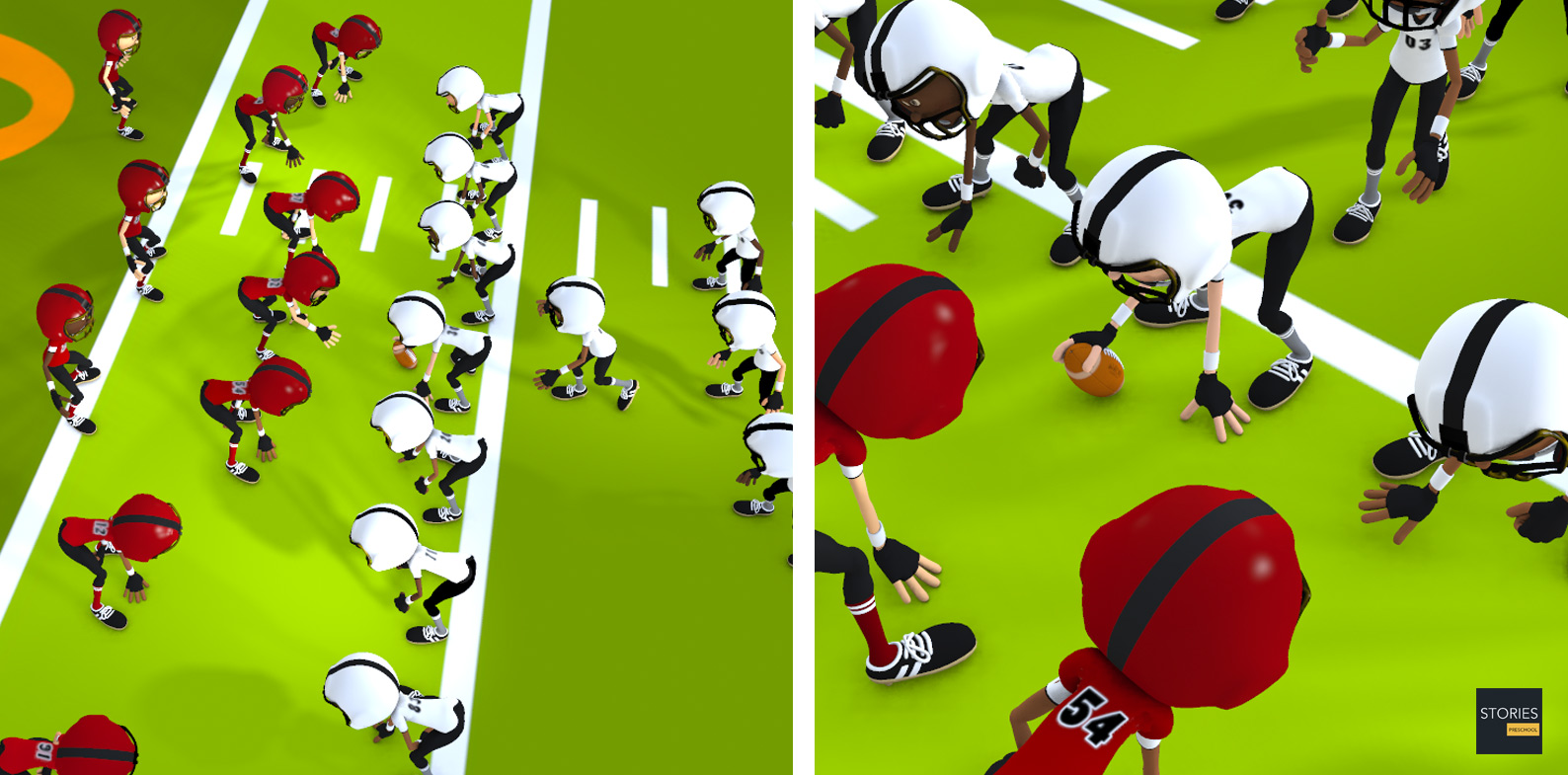
Each technique has its own strengths and weaknesses; therefore, each one is used accordingly in different situations. Furthermore, stances are taught and used differently depending on the level of competition (little league football, high school football, college football, etc.).
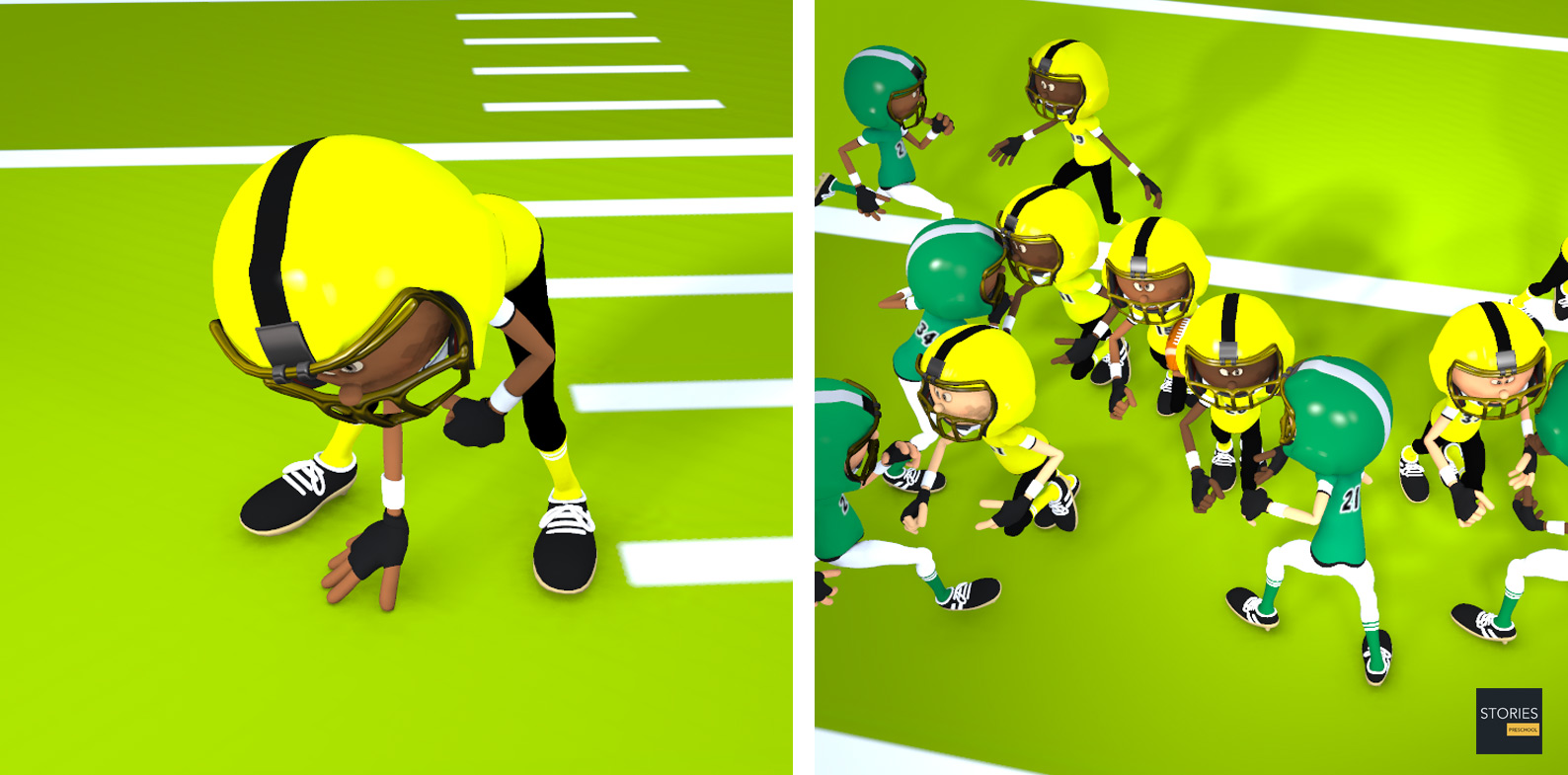
The three-point stance is a stance used by linemen and running backs in American football when ready for the start of a play. This stance requires one hand to touch the ground with the other arm cocked back to the thigh/hip region. The back should be slightly inclined forward, as well as the arm which is placed on the ground.
Offense Maneuvers
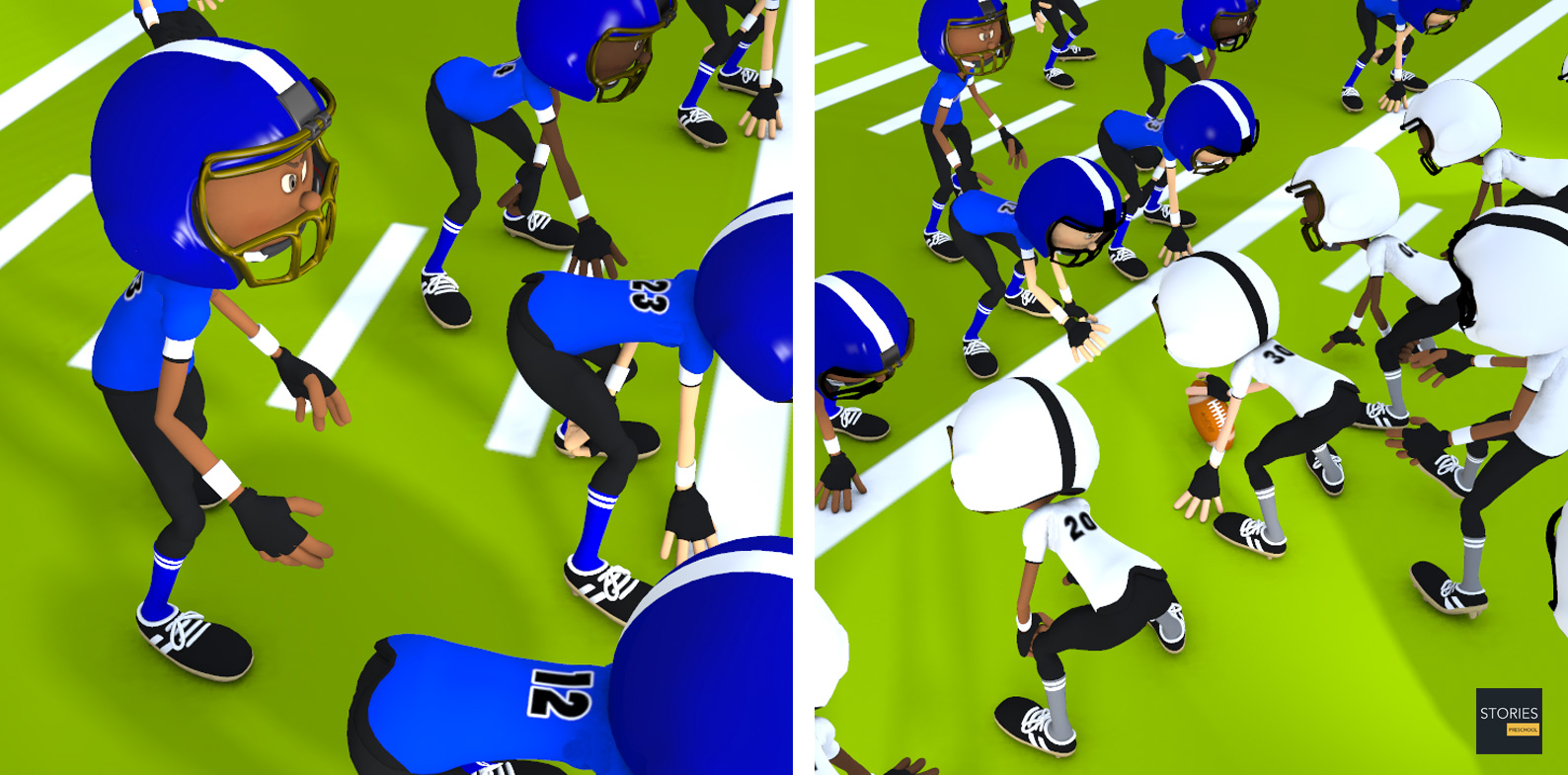
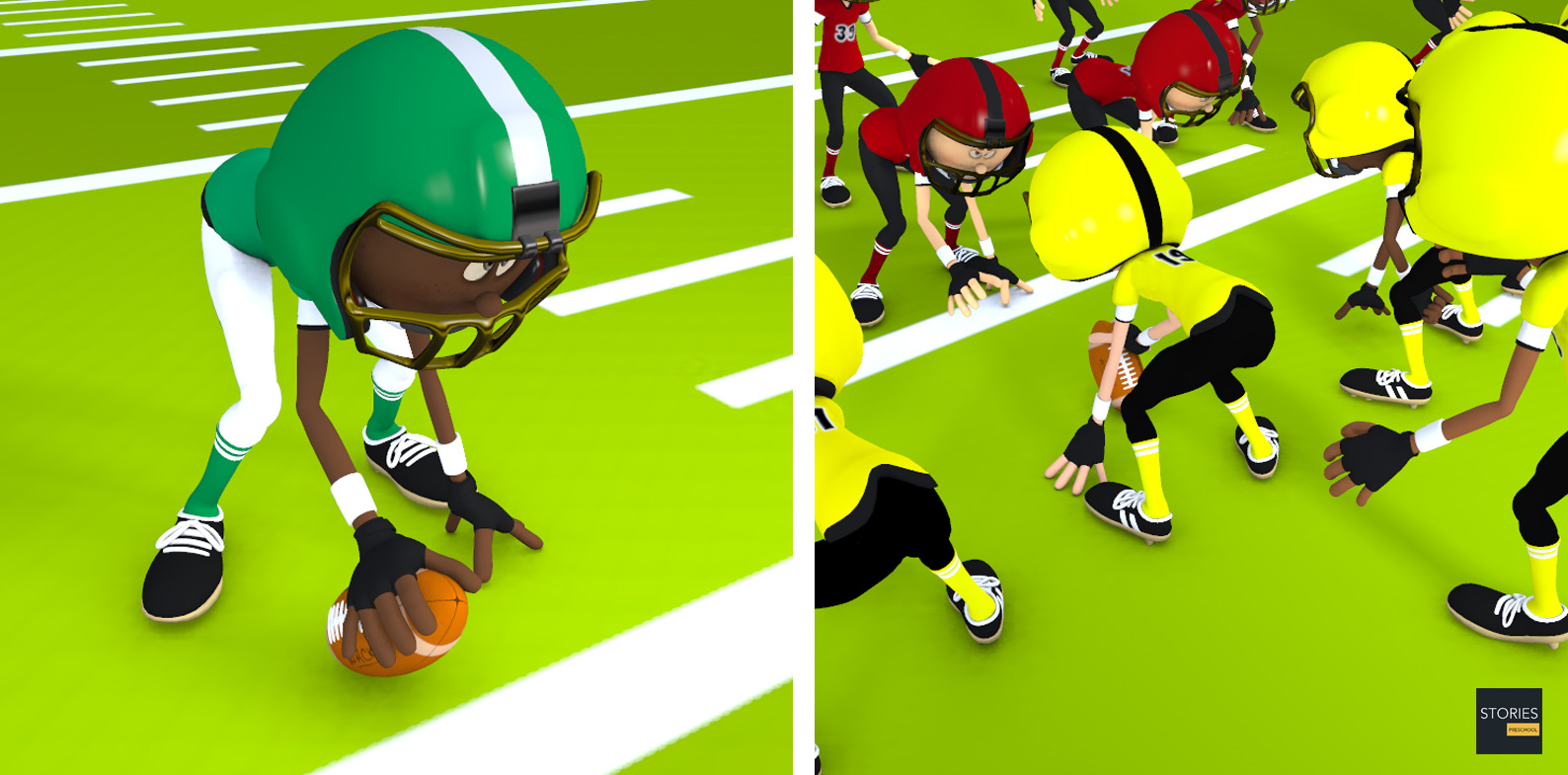
A snap (colloquially called a "hike", "snapback", or "pass from center") is the backwards passing of the ball in American and Canadian football at the start of play from scrimmage.
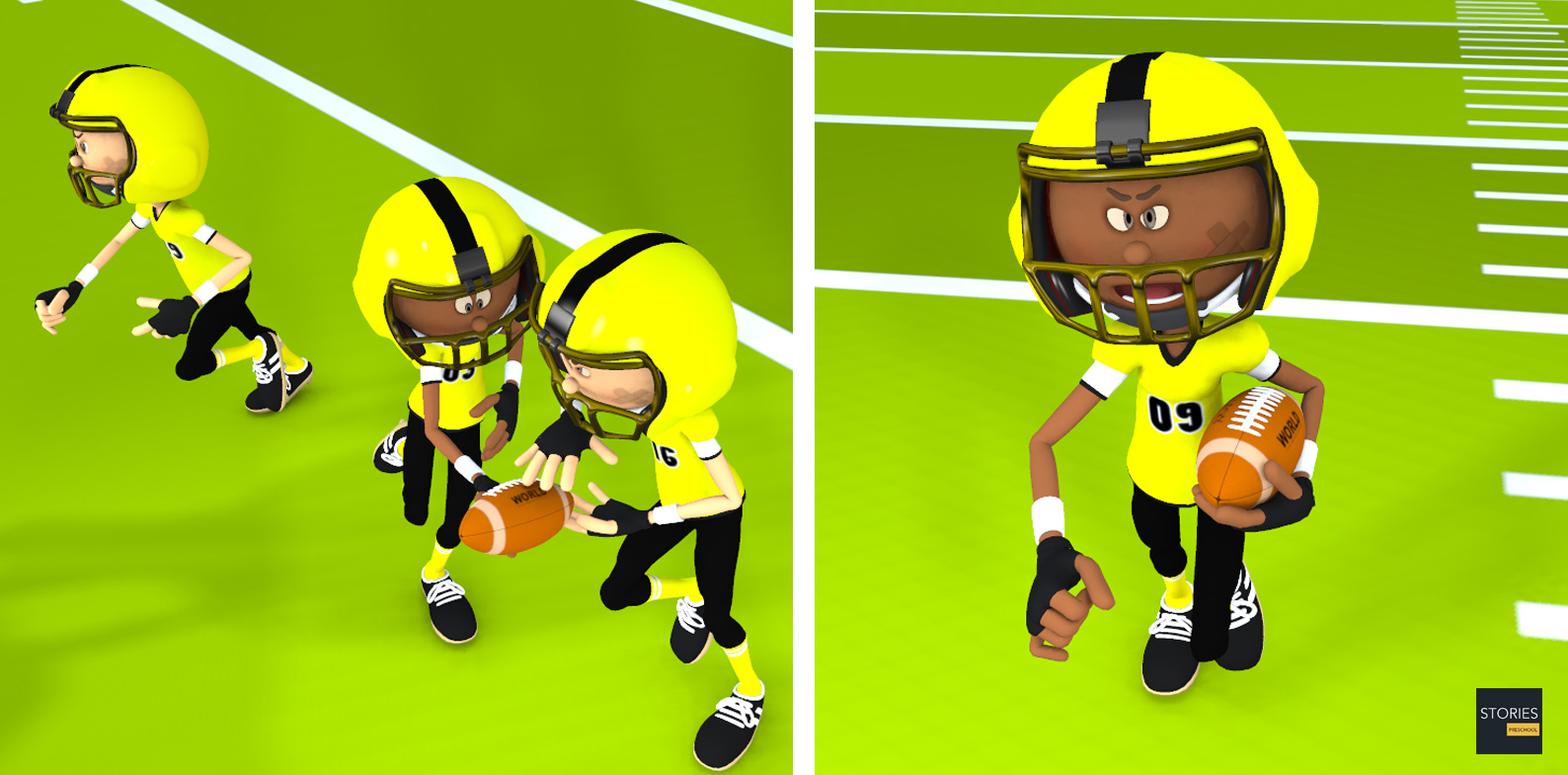
In American football, a hand-off is the act of handing the ball directly from one player to another, without it leaving the first player's hands.
Blocking or interference (or running interference) is a legal move occurring when one player obstructs another player's path with his body. The purpose of blocking is to prevent defensive players tackling the ball carrier, or to protect the quarterback while attempting to pass or hand-off the ball.
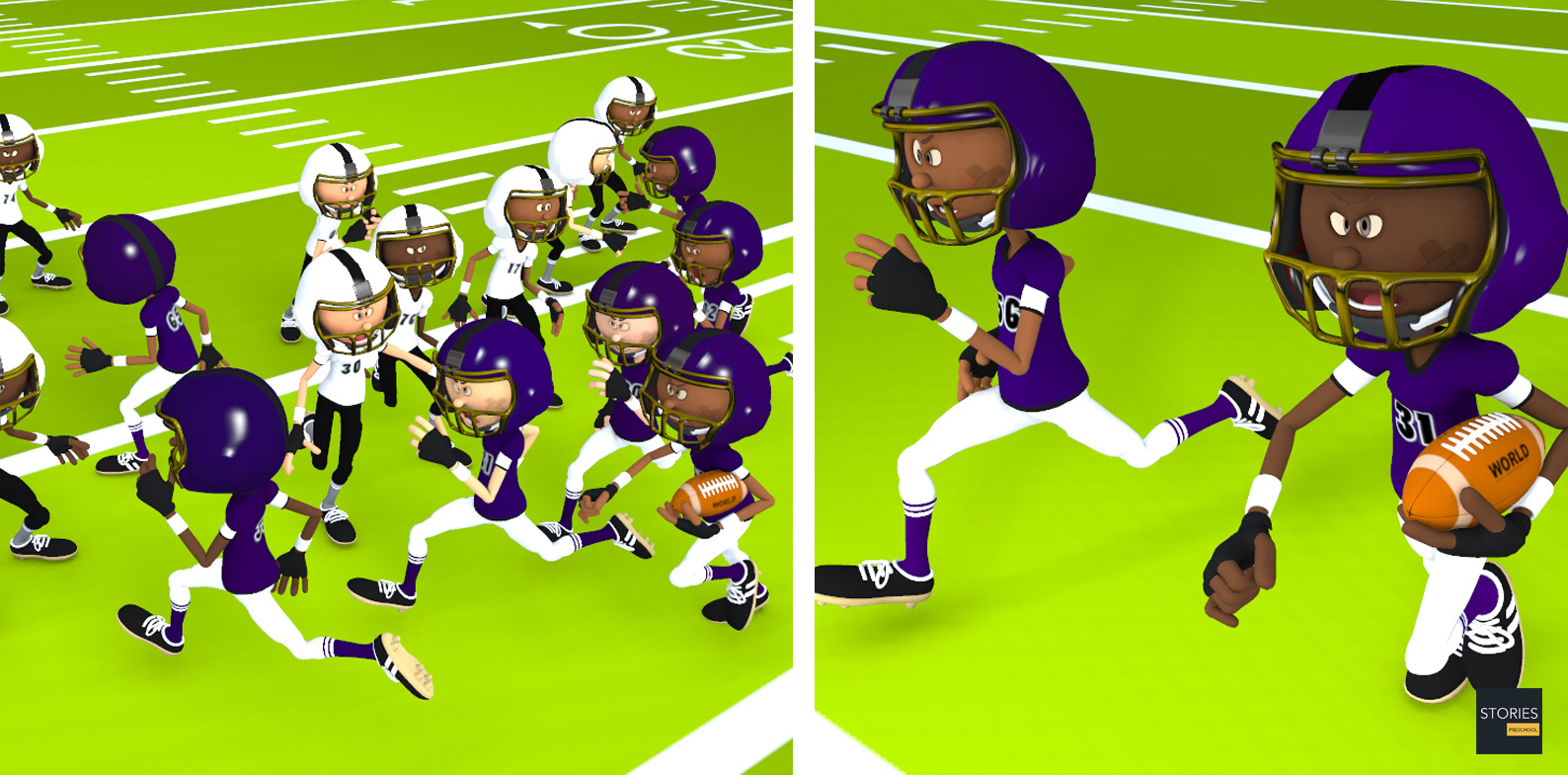
Offensive linemen and fullbacks tend to do the most blocking, although wide receivers are often asked to help block on running plays and halfbacks may be asked to help block on passing plays, while tight ends performs pass block and run block if they are not running routes to receive catches.
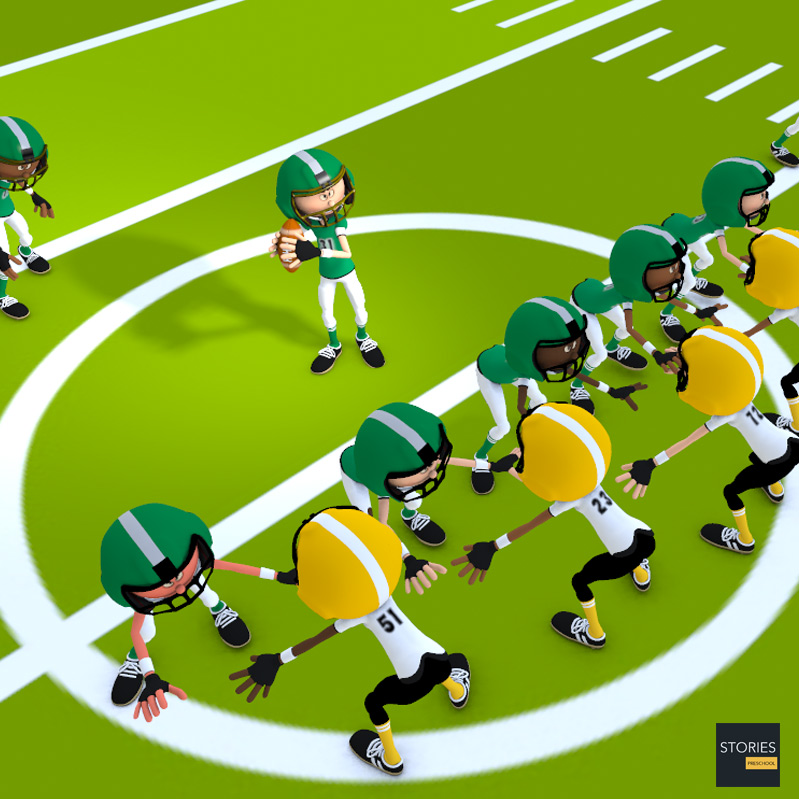
- In American football, a spiral is the continuous lateral rotation of the football following its release from the hand of a passer or foot of a punter.
- A route is a pattern or path that a receiver in American football and Canadian football runs to get open for a forward pass.
- A pump fake is a feigned attempt to pass the ball in football. It is a move by the quarterback to deceive the defense.
- A juke is a move in most forms of American football used to evade a tackler by deception, and thus without need of a stiff arm.
- In American football and Canadian football, a lateral pass or lateral (officially backward pass in American football and onside pass in Canadian football) occurs when the ball carrier throws the football to a teammate in a direction parallel to or away from the opponents' goal line.
- The stiff-arm fend (known as a hand off or fend off in rugby league and rugby union and sometimes as a don't argue in Australia or a stiff arm in American football) is a tactic employed by the ball-carrier in many forms of contact football.
- A quarterback scramble or scramble is an impromptu maneuver or run in American football and Canadian football by a quarterback.
- In gridiron football, a shift or motion refers to the movement of an offensive player prior to the snap.
- Zone blocking is a blocking technique in American football that is a simple and effective scheme for creating lanes for running plays.
Defense Maneuvers
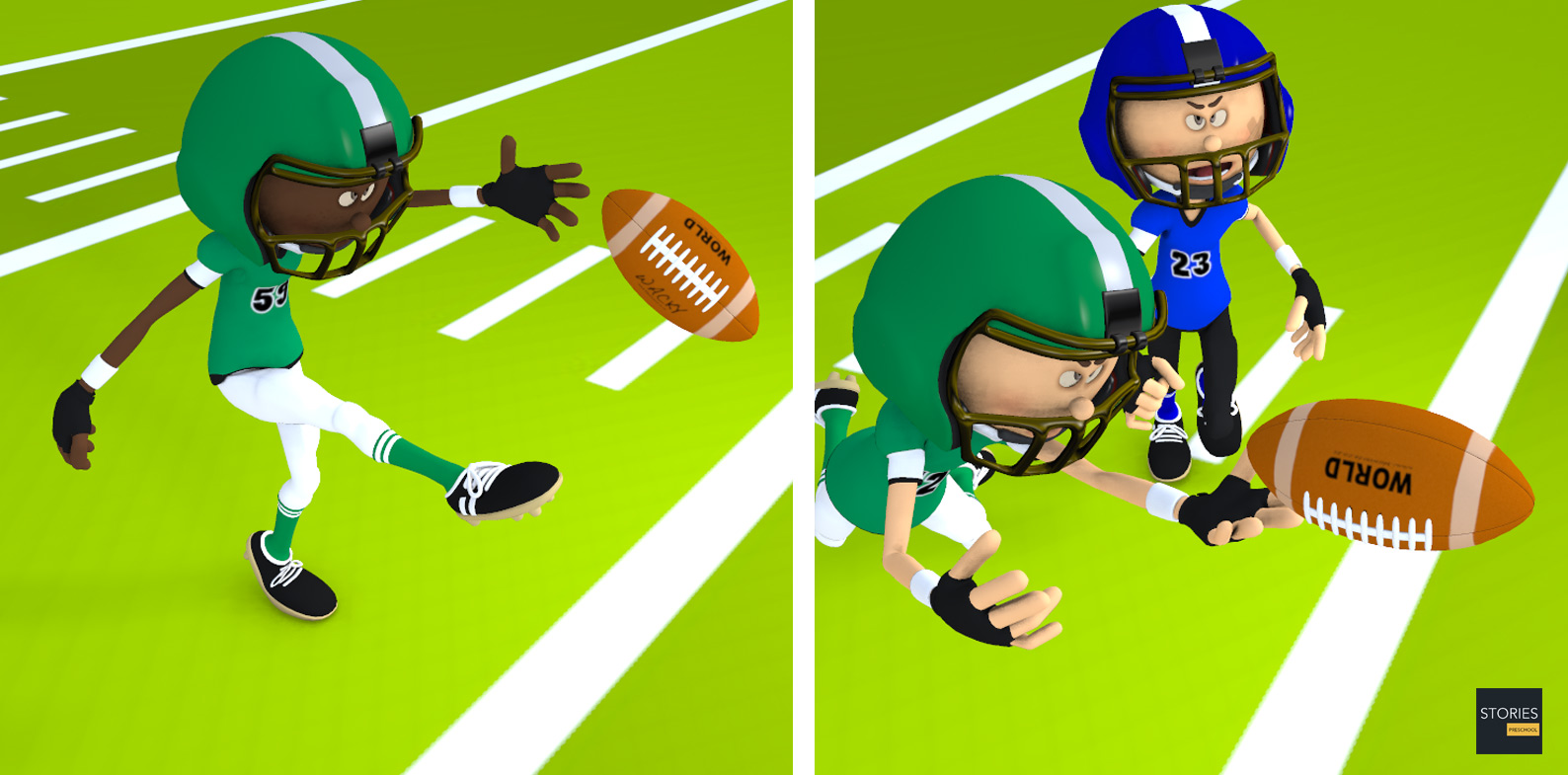
Most forms of football have a move known as a tackle. The primary and important purposes of tackling are to dispossess an opponent of the ball, to stop the player from gaining ground towards goal or to stop them from carrying out what they intend.
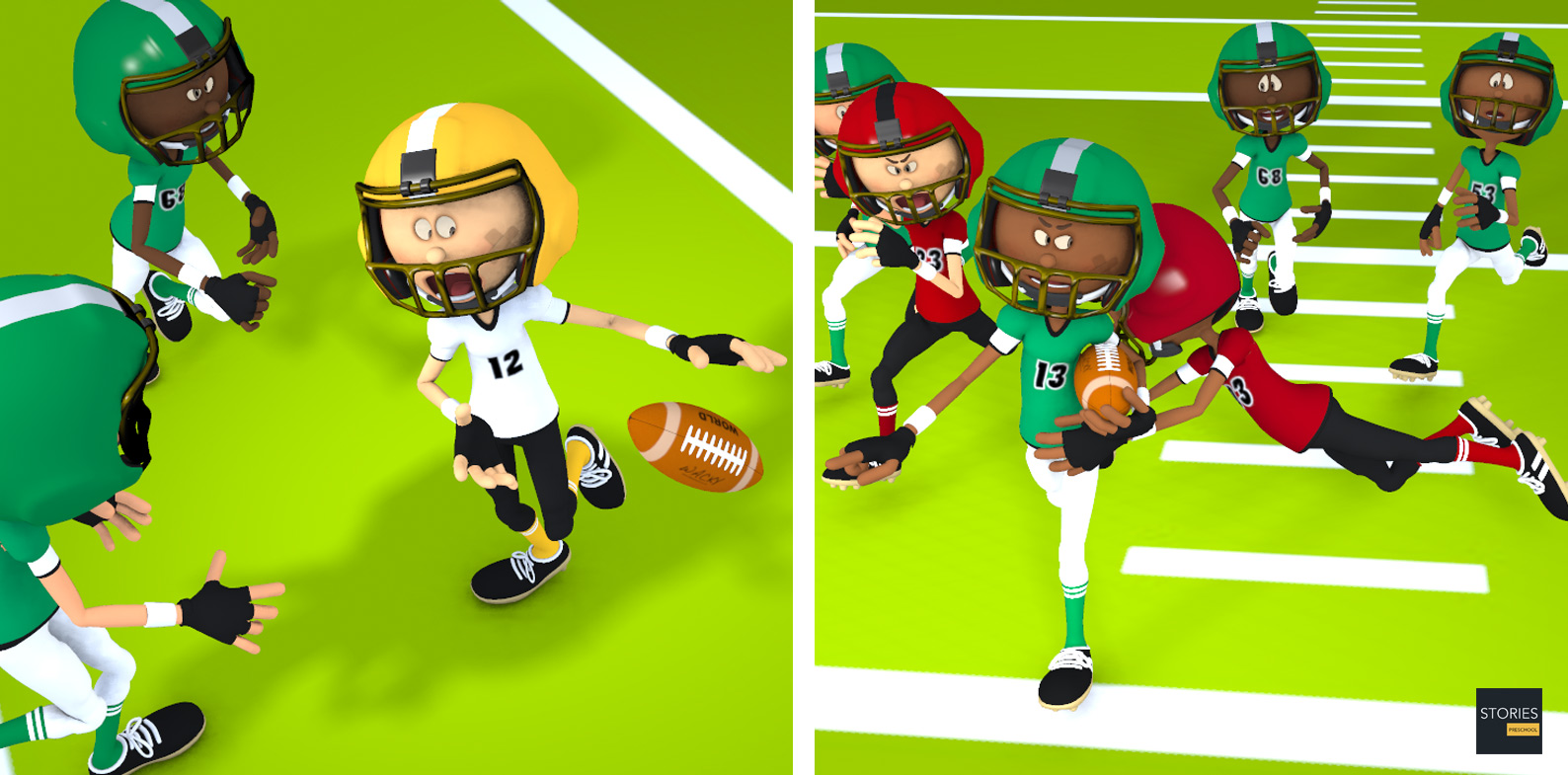
A stunt in American football and Canadian football, sometimes called a twist, is a planned maneuver by a pair of players of the defensive team by which they exchange roles to better slip past blockers of the offensive team at the beginning of a play.
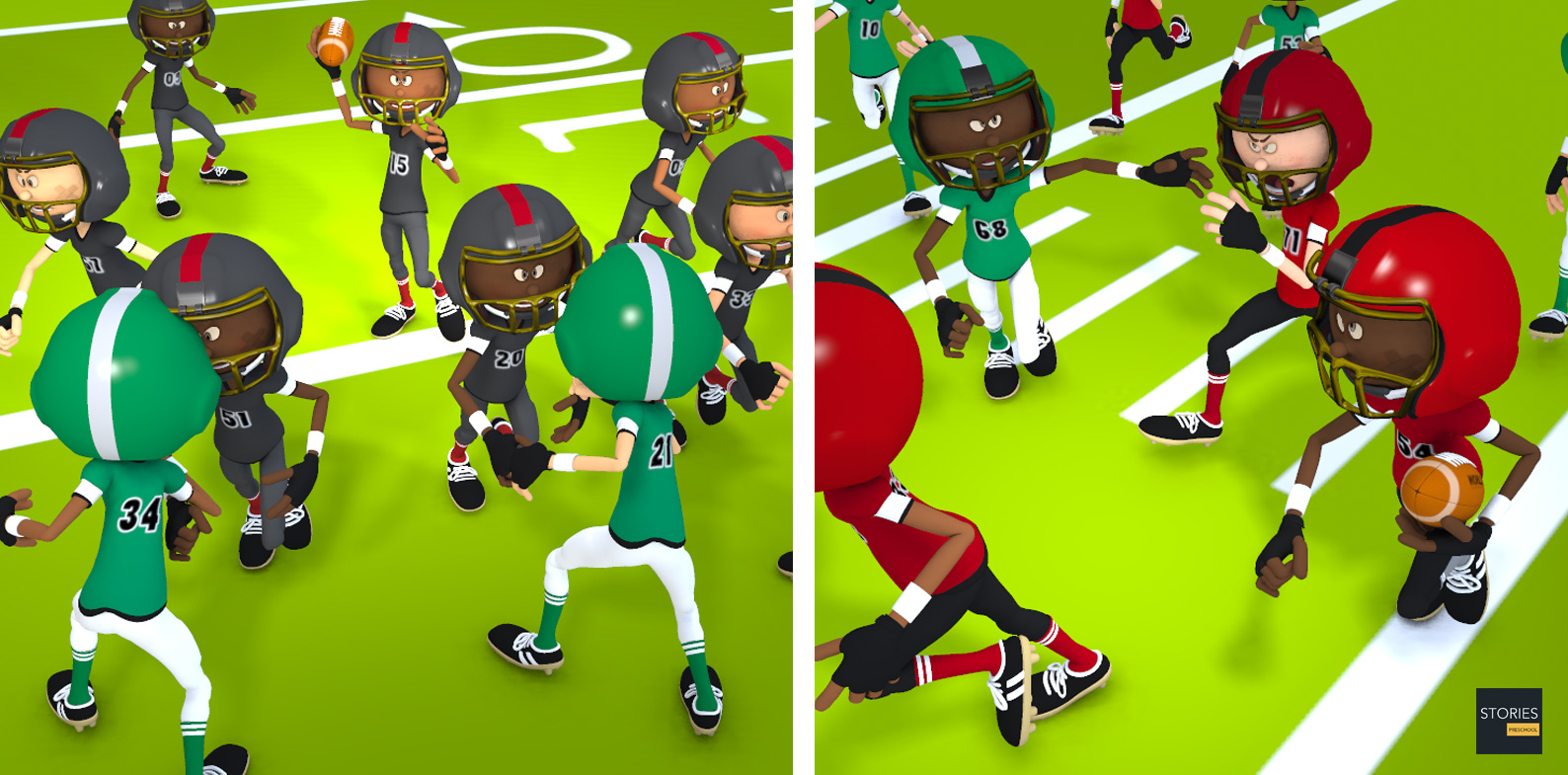
Shooting the gap is a term used in American football. To "shoot the gap," a defensive lineman will exploit the space between the offensive linemen.
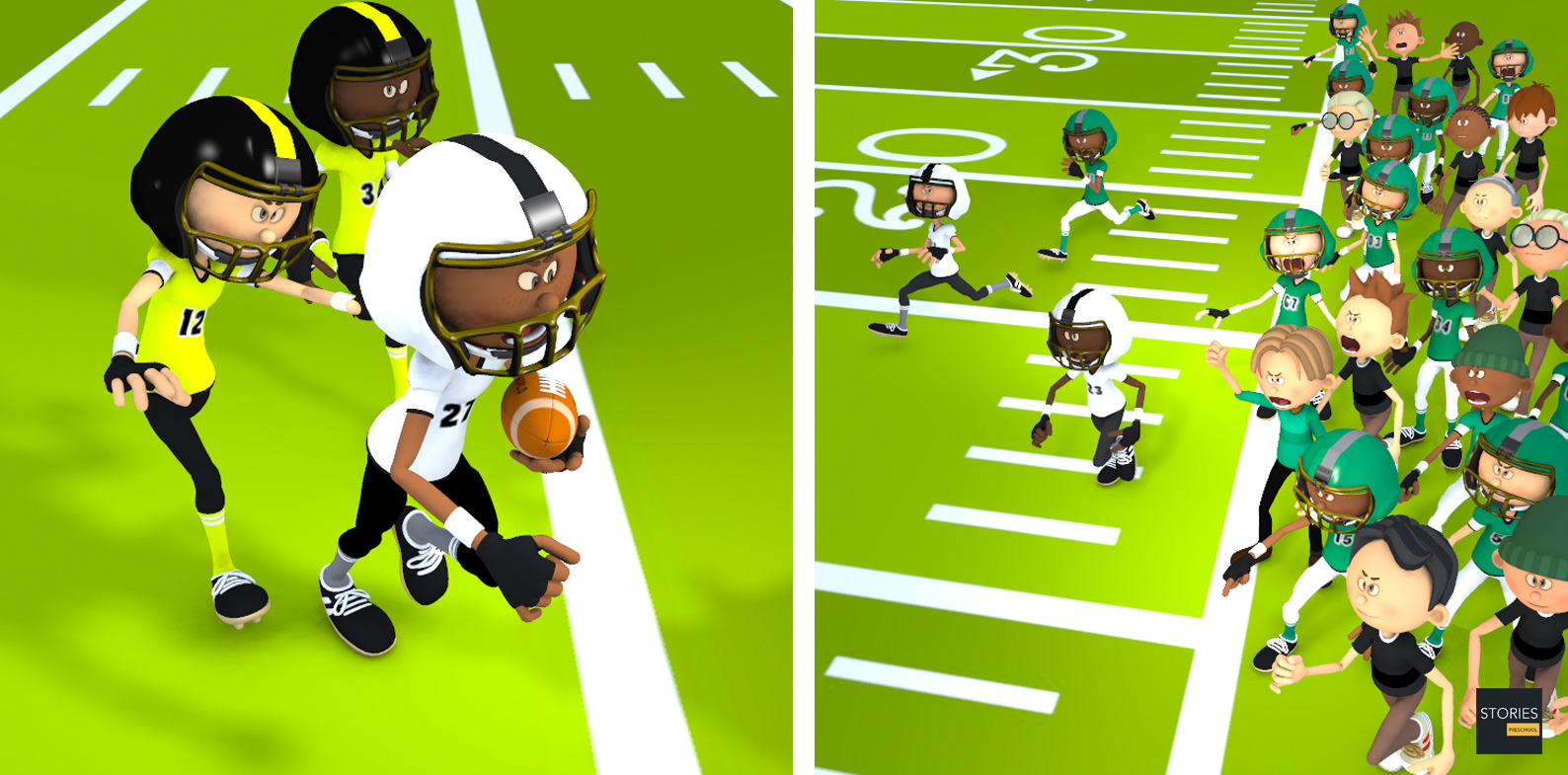
In American and Canadian football double coverage is a state of defensive playcalling wherein two defensive players are assigned to "cover" one offensive player. This situation is often seen with standout wide receivers and running backs.
SPORTS
RESOURCES
This article uses material from the Wikipedia articles "American Football", "American Football Rules", "Huddle", "Stance", "Three-point Stance", "Snap", "Hand-off", "Blocking (American Football)", "Spiral (Football)", "Route", "Pump Fake", "Juke", "Lateral Pass", "Stiff-arm Fend", "Quarterback Scramble", "Shift (Gridiron Football)", "Motion (Gridiron Football)", "Zone Blocking", "Tackle (Football Move)", "Stunt (Gridiron Football)", "Shoot the Gap", "Double Coverage", which is released under the Creative Commons Attribution-Share-Alike License 3.0.
© Stories Preschool. All Rights Reserved.